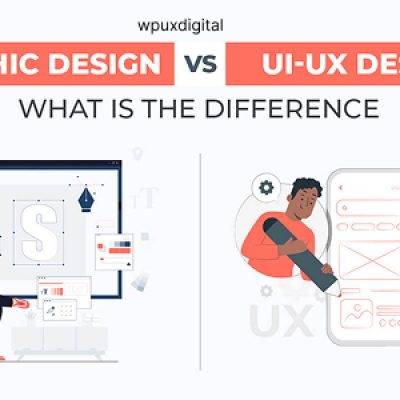
Introduction
UI(User Interface) and UX (User Experience) work together to ensure that a product is not visually appealing but also use for users. Improving UI/UX requires a balance design, usability, performance & user psychology. The boost UI UX Design is understanding the targets users. Conducting User research to help identify user needs, Pain points, goals and patterns. this can be done surveys, interviews, usability tools. the create a new interface that solve all problems and provide a best or smooth experiences.
User improve our skills to use essential elements of effective UI UX Design. Clean layout, clear navigation and visual clutter help user focus on important actions and using colors, typography and design elements across all pages improves usability and brand recognition.

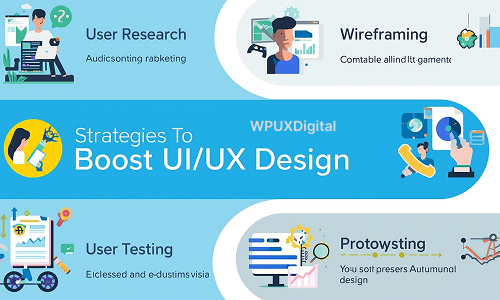
User Flow and navigation should be carefully planned to enhance the overall experience. Every interaction feel natural and guiding users from one step to the next confusion. clear button, logical page and easy to find menus help reduce and improve engagement.
Performance optimization also play a major role in UI UX strategy. Fast loading pages, optimized images and design ensure that user have a seamless experience across all devices.
Usability testing and improvement are key to long-term UI/UX success. collecting feedback, analyzing user behavior and making regular updates. a strong UI UX strategy can significantly enhance user satisfaction.
User Research & Tools Use
A useful approach toward improving the UX/UI design revolves around designing user-friendly, useful, and visually coherent digital experiences. Start by obtaining comprehensive knowledge of your target audience by researching, surveying and studying their behaviors. Create effective information architecture such that users will be able to locate what they require in a short time. Test the ideas with wireframes, interactive prototypes using such tools as Figma before development.The level of accessibility must also be kept with keyboards, color contrast and text size readability.The teamwork of designers, developers and stakeholders makes sure that it is feasible and in line with business objectives. Lastly, keep track of actual user behavior and conversion rates with the help of analytics systems like Google Analytics and repeat the process until you provide a smooth, user-friendly, and high-performing user experience.
Tips
- Understand Your Users:- Carry out user research, surveys and interviews to understand the goals, pain points, and behaviour of the users. Design user personas that are used to make design decisions.
- Focus on Simplicity:- Eliminate redundant features that will enable users to accomplish tasks as fast and effortlessly as possible.
- Create Clear Navigation:- Intuitive menu design and logical information structure to enable users not to get lost in their search of what they need.
- Use Visual Hierarchy:- The attention of the users should be captured with the help of size, color, distance, and contrast to showcase the significant information such as buttons and headings.
- Test with Real Users:- Do usability testing to find out problems prior to launch. It results in the experience of iterative testing.
- Ensure Accessibility:- Make it user friendly, and accessible to all users including the disabled by ensuring that fonts are readable, there is proper contrast and the page is navigable using a keyboard.
Contact Us
“Reach out to WPUX Digital for inquiries, support, or project discussions—we’re here to help you succeed.”
Get in Touch with Us!
“Connect with WPUX Digital today to discuss your project, ask questions, or explore tailored digital solutions.”
- Haryana, Panipat-132103
- wpuxdigital@gmail.com
- +91 8222000329